 AETHERIUM
What is Mega Satellite Internet?
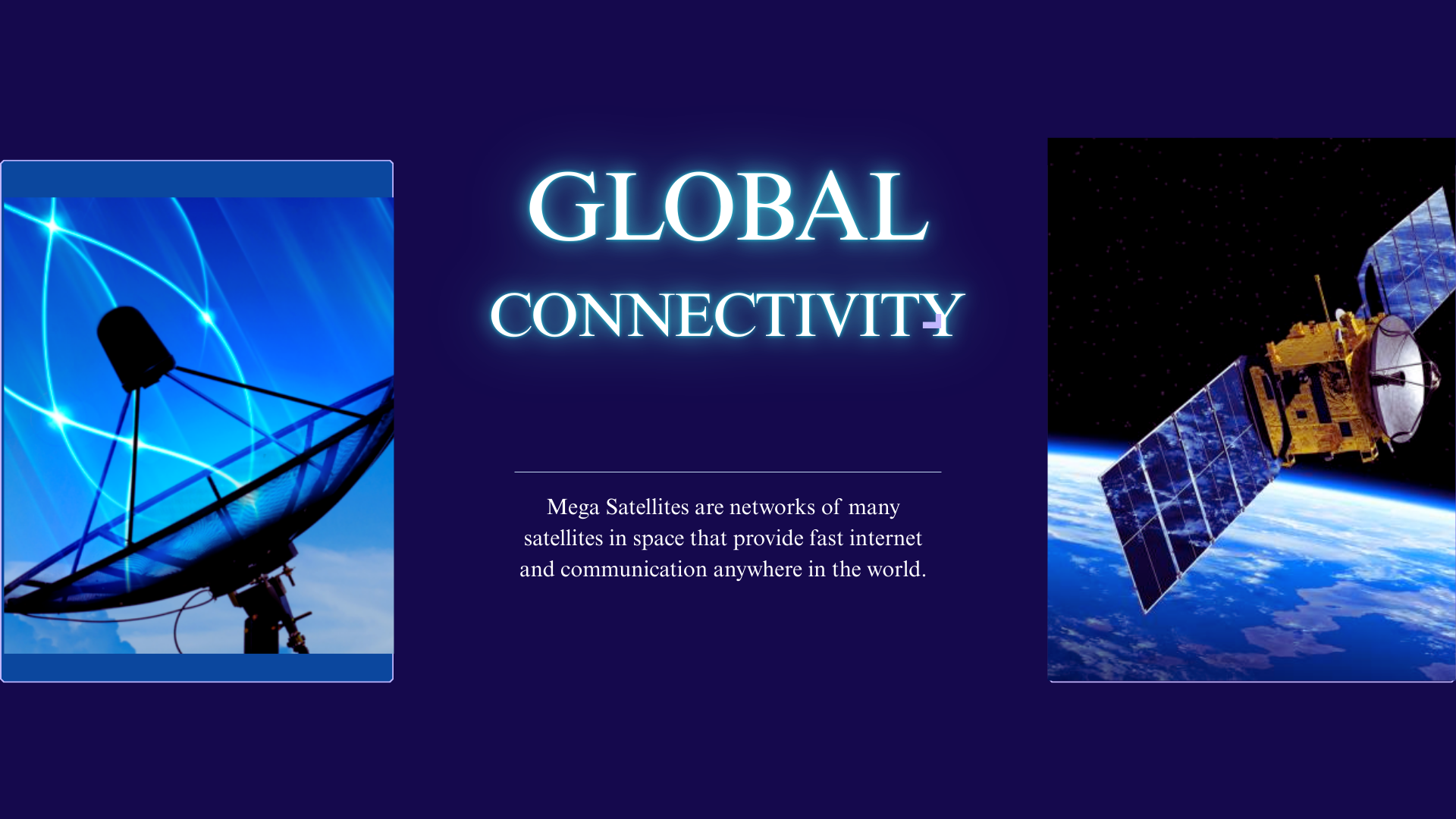
Mega Satellite Internet is a form of satellite-based internet that uses hundreds or even thousands of satellites orbiting the Earth to provide internet connectivity. Unlike traditional satellites in high-geostationary orbits, these low-earth orbit (LEO) satellites are closer to the Earth, which reduces latency and allows for faster speeds.
Key points:
Provides global coverage, including rural and remote areas.
Uses satellites instead of cables to deliver internet.
Can be accessed via a small satellite dish or terminal at the user’s location
How Mega Satellite Internet Works
Satellite Constellation 🌌
Hundreds of LEO satellites orbit the Earth, forming a network.
These satellites communicate with each other and ground stations to relay internet data.
Ground Stations and User Terminals 📡
Ground stations connect satellites to the global internet network.
Users install a satellite dish or terminal to receive and transmit signals.
Data Transmission ⚡
Signals travel between satellites and terminals at high speeds.
Advanced technology ensures low latency and stable internet even at great distances.
Features of Mega Satellite Internet
High-Speed Connectivity ⚡ – Comparable to fiber-optic networks.
Global Coverage 🌍 – Internet access in remote mountains, oceans, deserts, and rural regions.
Low Latency ⏱️ – LEO satellites reduce lag for real-time applications like video calls and gaming.
Quick Deployment 🚀 – No need for extensive cable networks; easy to set up in new areas
Advantages of Mega Satellite Internet
Connectivity Anywhere 🏔️ – Reaches regions where traditional ISPs cannot.
Disaster Recovery 🌪️ – Provides emergency internet during natural disasters.
Support for IoT and Smart Devices 📱 – Enables smart agriculture, remote monitoring, and IoT applications.
Scalable Network 📈 – More satellites can be added to increase coverage and bandwidth
Challenges
Weather Interference ☁️ – Heavy rain or storms can affect signal quality.
High Initial Cost 💰 – Setting up terminals and satellites is expensive.
Space Debris Risk 🛰️ – Large constellations increase the chance of collisions in orbit.
Bandwidth Limitations – High demand areas may experience slower speeds until more satellites are added.
Future of Mega Satellite Internet
The future is promising:
More Affordable Access 💵 – Costs of terminals and subscriptions are expected to decrease.
Higher Speeds and Lower Latency ⚡ – Next-generation satellites will improve performance.
Integration with 5G Networks 📶 – Satellites will complement terrestrial networks for seamless global coverage.
Space-Based Innovation 🛰️ – Could support space travel and research with reliable connectivity beyond Earth.