 AETHERIUM
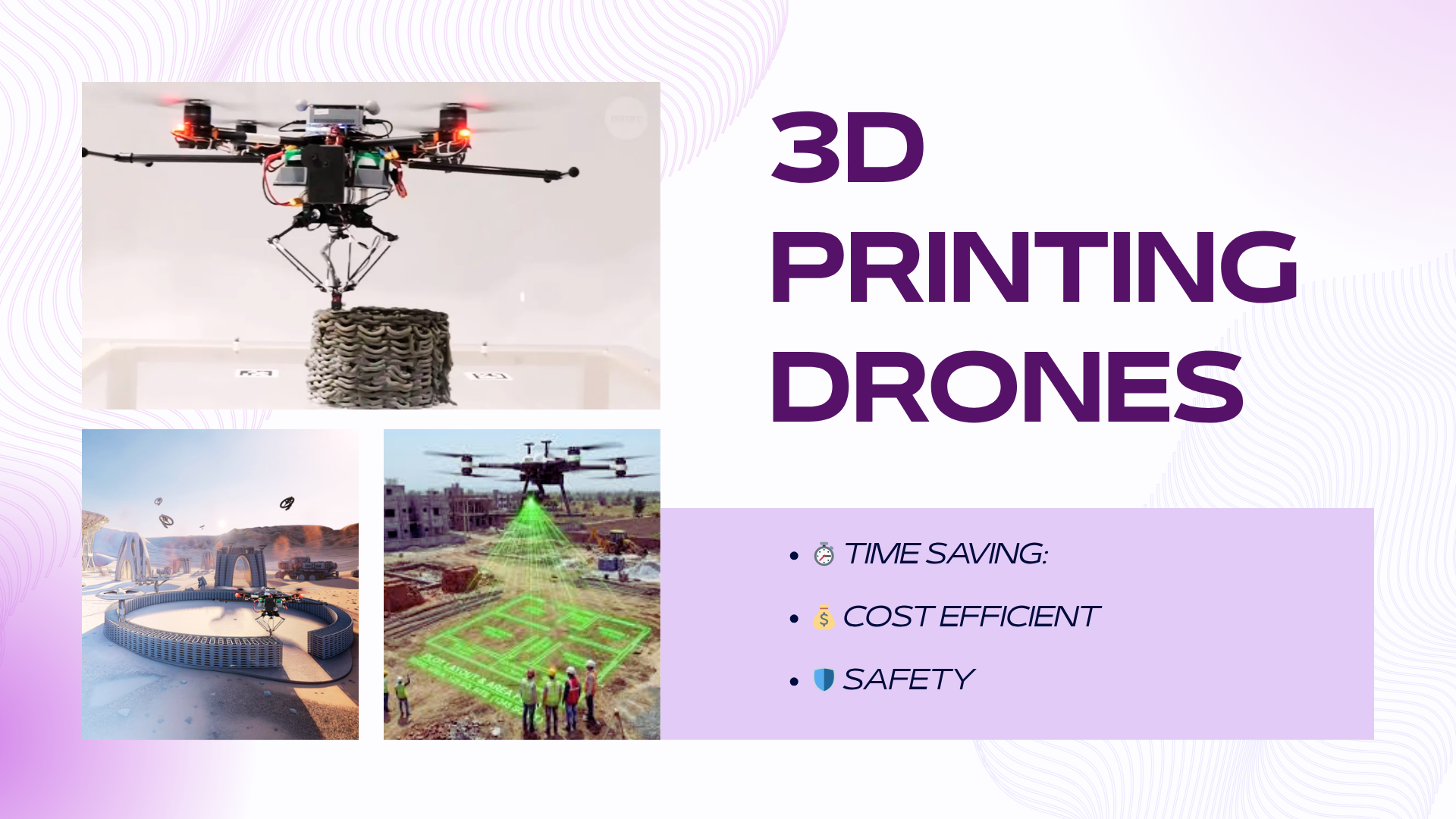
3D Printed Drones: Transforming the Future of Flight 🚁🖨️
Introduction 🌟
In today’s fast-moving tech world, innovation is happening at an incredible pace. One of the most exciting advancements is the rise of 3D printed drones. By combining drone technology with 3D printing, engineers and creators can design and build drones faster, cheaper, and more efficiently than ever before.
What Are 3D Printed Drones? 🤔
3D printed drones are unmanned aerial vehicles (UAVs) whose parts are created using 3D printing technology. Instead of traditional manufacturing, components like frames, arms, and protective covers are printed layer by layer. This allows for high precision and easy customization based on specific needs.
How Does It Work? ⚙️
Designers first create a digital model of the drone using software. Then, a 3D printer builds the parts using materials like plastic or resin. Once printed, the components are assembled with motors, sensors, and electronics to create a fully functional drone ready to fly 🚀.
Where Are 3D Printed Drones Used? 🌍🚁
3D printed drones are used in many fields due to their flexibility and fast production:
Agriculture 🌾 – crop monitoring, spraying fertilizers and pesticides
Disaster Management 🚑 – search and rescue, damage assessment
Defense & Surveillance 🛰️ – border monitoring and security
Photography & Filmmaking 🎥 – aerial shots and creative filming
Education & Research 📚 – learning, prototyping, and experiments
Delivery Services 📦 – small package transportation
Advantages of 3D Printed Drones 🚀
Customizable Design – easily modify based on needs
Lightweight – better flight performance and longer battery life 🔋
Cost-Effective – cheaper than traditional manufacturing
Fast Production – quick prototyping and development
Easy Repair – damaged parts can be reprinted quickly
Disadvantages of 3D Printed Drones ⚠️
Material Strength – may be weaker than metal or factory-made parts
Limited Durability – not ideal for heavy-duty or extreme conditions
High Initial Setup Cost 💰 – good 3D printers can be expensive
Regulations – legal restrictions on drone usage in many areas
Technical Skills Needed – requires design and printing knowledge
Applications 🌍
3D printed drones are being used in many industries. In agriculture, they help monitor crops and spray fertilizers 🌾. In disaster management, they assist in search and rescue operations 🚑. They are also popular in photography and filmmaking 🎥, as well as in research and education.
Challenges ⚠️
Despite their advantages, there are some limitations. The strength of 3D printed materials may not always match traditional materials. High-quality printers and materials can be costly 💰, and there are also safety and legal regulations that need to be followed when using drones.
Future Scope 🔮
The future of 3D printed drones looks very promising. With advancements in materials and technology, drones will become stronger, smarter, and more efficient. Integration with AI and automation will further enhance their capabilities, opening doors to new innovations and uses 🤖.
Conclusion ✨
3D printed drones are revolutionizing the way aerial devices are built and used. They offer flexibility, speed, and affordability, making them a powerful tool for the future. As technology continues to evolve, these drones will play a major role in shaping industries and everyday life 🚁🌍.