 AETHERIUM
🌍 Reaching New Heights: How High-Altitude Drones Are Changing the Skies ✈️☁️
Introduction
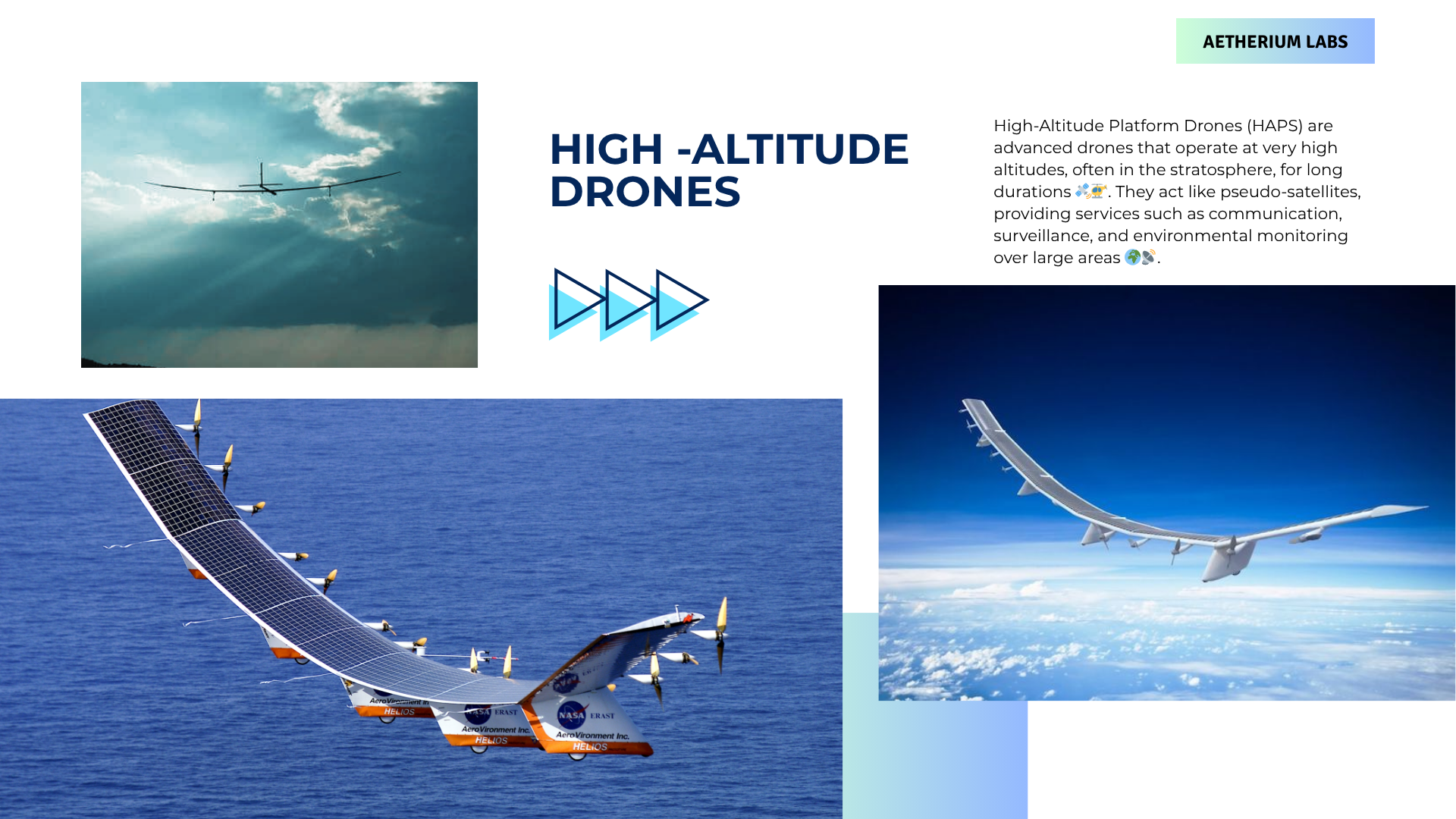
High-altitude drones, often referred to as High-Altitude Platform Systems (HAPS), are transforming how we observe, connect, and understand our world. Operating far above commercial aircraft, these drones fly in the stratosphere—bridging the gap between satellites and traditional aviation. 🚀
What Are High-Altitude Drones?
High-altitude drones are unmanned aerial vehicles designed to fly at altitudes typically above 50,000 feet. Unlike regular drones, they can stay airborne for days, weeks, or even months. Powered by advanced batteries and often solar energy, these drones are built for endurance and efficiency. ☀️🔋
How Do They Work?
These drones rely on lightweight materials, aerodynamic designs, and renewable energy sources. Solar panels generate power during the day, while energy stored in batteries keeps them flying at night. Their high-altitude position allows them to cover vast areas, making them ideal for communication and monitoring tasks. 📡
Key Applications
1. Communication & Internet Access 🌐
High-altitude drones can deliver internet connectivity to remote and underserved regions. They act like floating cell towers, helping bridge the digital divide.
2. Environmental Monitoring 🌱
From tracking climate change to monitoring wildlife and forests, these drones provide critical data for researchers and governments.
3. Disaster Management 🚨
In emergencies like floods, earthquakes, or wildfires, high-altitude drones offer real-time surveillance and communication support when ground infrastructure fails.
4. Defense & Surveillance 🛡️
They are widely used for border monitoring and intelligence gathering, offering a safer and more cost-effective alternative to manned aircraft.
Advantages of High-Altitude Drones
Long Endurance: Can remain airborne for extended periods
Wide Coverage: Monitor large geographic areas
Cost-Effective: Cheaper than launching satellites
Eco-Friendly: Often powered by renewable energy 🌿
Challenges and Limitations
Despite their potential, high-altitude drones face several challenges:
Extreme Weather Conditions: Harsh stratospheric environments
Technical Complexity: Advanced engineering requirements
Regulatory Issues: Airspace and safety regulations vary globally
High Initial Costs: Development and deployment can be expensive
The Future of High-Altitude Drones
The future looks promising as technology continues to evolve. Companies and governments are investing heavily in developing more efficient and reliable systems. In the coming years, high-altitude drones could play a major role in global connectivity, climate research, and even smart city infrastructure. 🌆
Conclusion
High-altitude drones are more than just flying machines—they are a glimpse into the future of aviation and technology. By operating at the edge of space, they unlock new possibilities for communication, monitoring, and global connectivity. As innovation continues, these sky-bound systems will become an essential part of our everyday lives. 🚀✨