 AETHERIUM
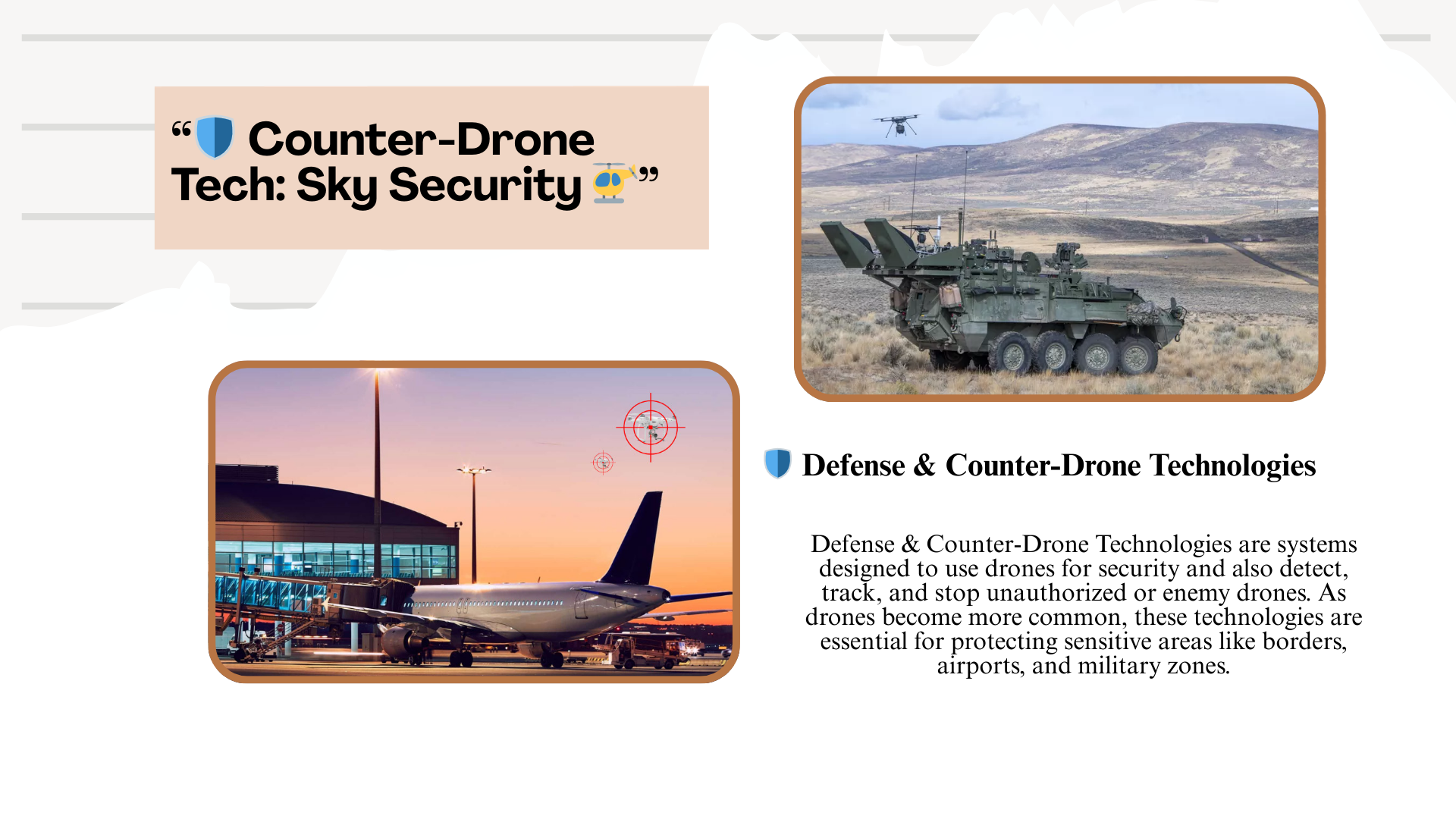
Defence & Counter-Drone Technology 🛡️✈️: Securing the Skies Against Unmanned Threats
With the rapid rise of drones in both civilian and military sectors, unauthorized or hostile drones have become a major concern for security agencies worldwide. To address this, defence and counter-drone technologies have emerged as critical tools to detect, track, and neutralize aerial threats, ensuring the safety of sensitive areas, military bases, airports, and public events.
What is Counter-Drone Technology?
Counter-drone technology refers to systems and methods designed to prevent drones from performing unwanted or malicious activities. These technologies combine radar, AI, electronic warfare, and interception mechanisms to neutralize potential threats before they cause harm.
Key Components
1. Detection Systems 👀
Radar and RF (Radio Frequency) scanners detect drones in restricted airspace
Optical and thermal cameras track drone movements
AI algorithms identify drone type, size, and threat level
2. Interception & Neutralization ⚔️
Jamming Systems: Disrupt drone communications or GPS to force landing
Interceptor Drones: Specialized drones capture or disable hostile drones mid-air
Laser or Projectile Systems: Physically destroy drones when necessary
3. Integration & Control 🖥️
Central command software coordinates detection, tracking, and interception
Can manage multiple drones and threats simultaneously
Often connected with AI-based threat analysis for fast decision-making
Applications
🛡️ Military
Prevent enemy surveillance or attacks using UAVs
Protect forward bases and battlefield operations
🏛️ Government & Infrastructure
Secure airports, power plants, and government buildings
Prevent espionage or illegal drone activity
🎉 Public Safety
Large events, sports arenas, and VIP security
Prevent crowd disruptions or potential attacks from drones
Advantages
Early Threat Detection: Identifies drones before they reach sensitive areas
Reduced Risk to Personnel: Neutralizes drones without human intervention
Automated Response: AI systems enable fast and precise countermeasures
Scalable Protection: Can protect wide areas with multiple detection and interception layers
Challenges
High-Speed Drones: Difficult to intercept due to rapid movement
Electronic Warfare: Jammed or encrypted drones can bypass systems
Cost: Advanced counter-drone systems are expensive to deploy and maintain
Legal & Ethical Issues: Must ensure civilian drones aren’t accidentally targeted
Examples of Counter-Drone Systems
Yolka Interceptor Drone – Captures and disables hostile UAVs mid-flight
DroneShield Systems – Electronic jamming and detection solutions for military and civilian use
Airbus Counter-UAV Solutions – Combines radar, sensors, and AI for comprehensive drone defense
Conclusion
As drones become more ubiquitous and sophisticated, defence and counter-drone technologies 🛡️✈️ are essential for protecting airspace, infrastructure, and human lives. By combining detection, AI analysis, and neutralization methods, these systems provide a smart, fast, and effective shield against unauthorized drones, making them a cornerstone of modern security strategies.