 AETHERIUM
🚁⚡ Wireless Charging Drones: The Future of Continuous Flight
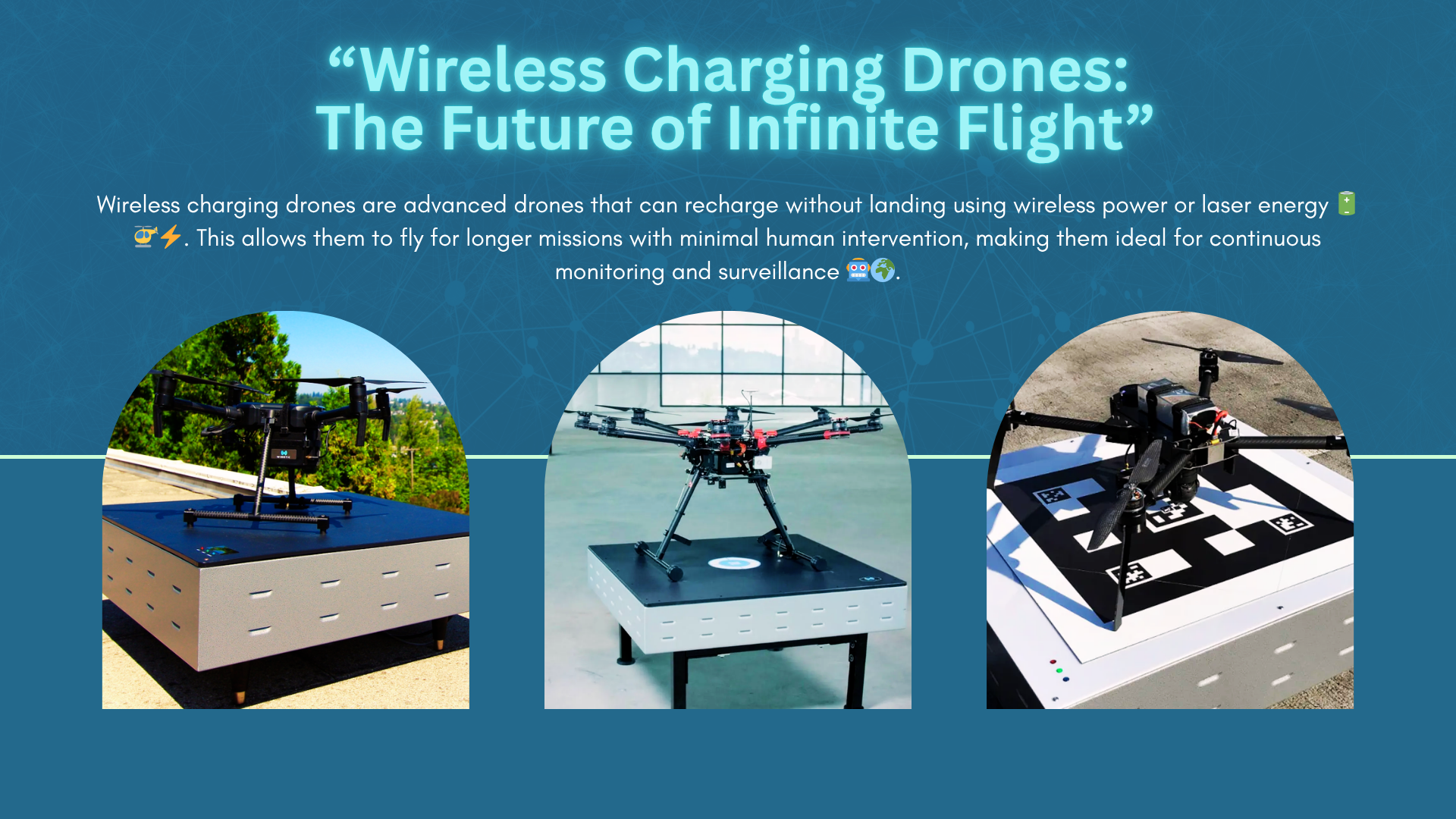
Wireless charging drones are one of the most exciting innovations in modern drone technology. These drones are designed to recharge without landing, allowing them to stay in the air for much longer periods 🔋🚁. This concept is also known as “infinite flight” or continuous aerial operation.
🔍 What Are Wireless Charging Drones?
Wireless charging drones are unmanned aerial vehicles that can recharge their batteries using wireless energy transfer systems or laser-based charging stations. Instead of landing and manually replacing or plugging in batteries, these drones can receive power while operating or by briefly docking at a smart charging station ⚡.
⚙️ How Do They Work?
The system usually includes:
📡 Ground-based charging stations that transmit energy
🔋 Wireless power transfer or laser beams to deliver energy
🤖 Smart onboard systems that manage battery levels
🚁 Autonomous landing/docking for quick recharging
When the battery gets low, the drone either hovers near a power source or automatically returns to a charging point.
🧠 Key Features
🔄 Continuous or long-duration flight capability.
🤖 Autonomous charging and energy management.
📡 Minimal human intervention.
⚡ Advanced energy transfer technology.
🌍 Suitable for remote and large-area operations.
🏭 Applications
Wireless charging drones are useful in many industries:
🛡️ Security & surveillance – 24/7 monitoring
🌾 Agriculture – continuous crop monitoring
🏭 Industrial inspection – pipelines, power lines, factories
🚨 Disaster management – long emergency operations
🌍 Environmental monitoring – weather and pollution tracking
⚡ Benefits
⏱️ No frequent landing required
🚁 Longer mission time
📊 Better real-time data collection
💰 Reduced operational downtime
🔄 Fully automated operations possible
⚠️ Challenges
💸 High development and setup cost
🔬 Complex wireless energy technology
🌦️ Weather interference can affect charging efficiency
🔋 Energy transfer limitations over long distances.
🌍 Future of Wireless Charging Drones
In the future, these drones could become fully autonomous systems capable of flying for days or even weeks without interruption 🚁⚡. With improvements in laser power transfer, AI energy management, and smart docking systems, they may revolutionize industries like surveillance, logistics, and smart cities.
✨ Conclusion
Wireless charging drones represent a major step toward fully autonomous, always-active aerial systems 🔋🚁. They reduce downtime and increase efficiency, making them a key technology for the future of drone applications.