 AETHERIUM
Humanoid Robotics and Physical AI: The Future of Smart Machines 🤖
In the rapidly advancing world of technology, humanoid robotics and physical AI are emerging as revolutionary forces that are transforming the way humans interact with machines. Together, these technologies are not only making robots more human-like in appearance and movement but also endowing them with intelligence to perceive, learn, decide, and act autonomously.
What is Humanoid Robotics?
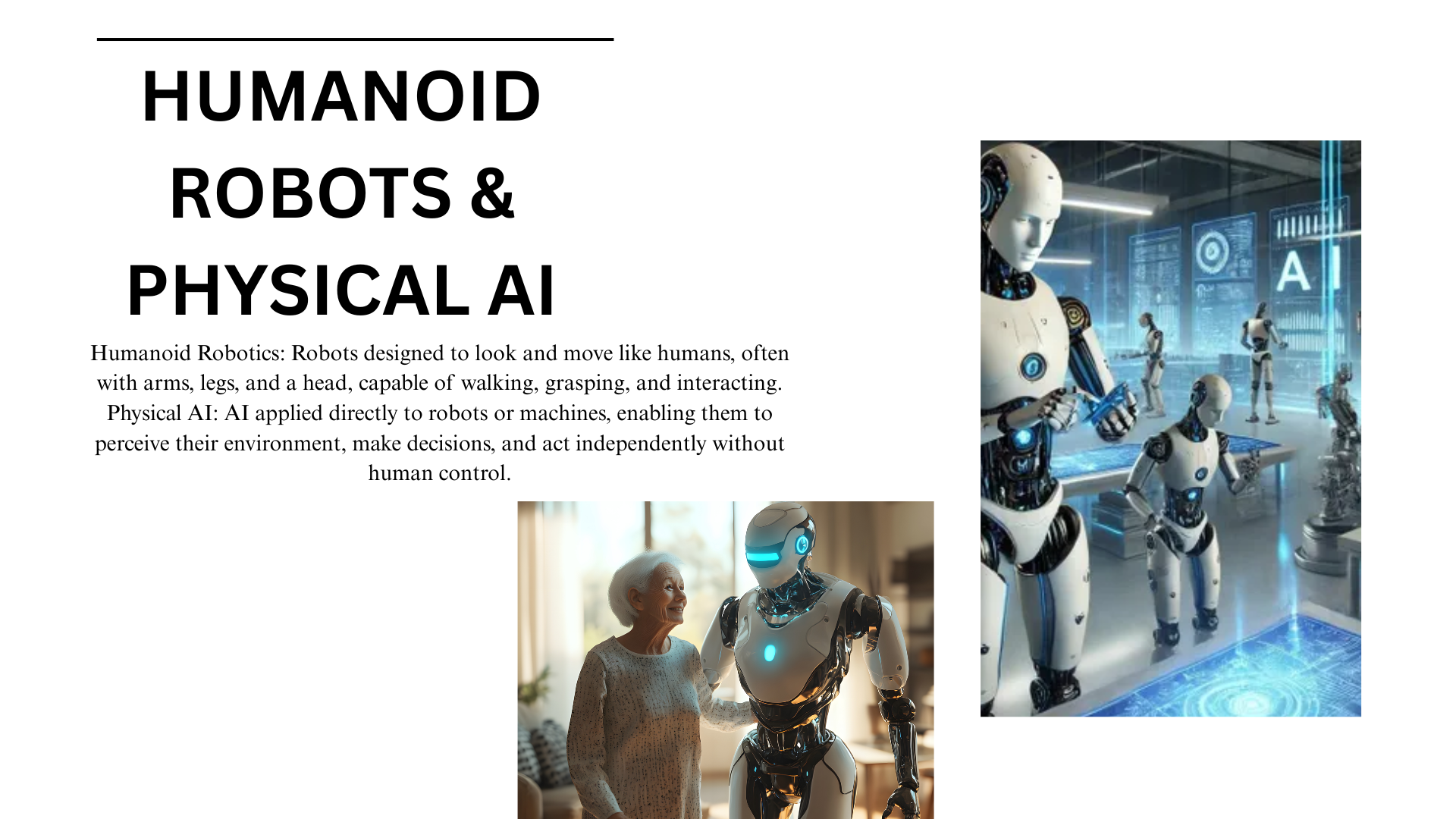
Humanoid robots are machines designed to resemble humans in form and behavior. They often have a head, torso, arms, and legs, and they can perform movements similar to human actions.
Key features include:
Human-like structure: Arms, legs, and joints mimic human anatomy
Movement capabilities: Walking, grasping objects, gesturing, or interacting
Sensory input: Equipped with cameras, microphones, and sensors to understand their environment
Examples in real life:
Robots assisting patients in hospitals
Reception robots in offices or hotels
Robots designed for research in space or underwater exploration
Humanoid robots are not just about looks; they are designed to interact naturally with humans, making them ideal for workplaces, healthcare, and service industries.
What is Physical AI?
Physical AI refers to applying artificial intelligence directly to machines or robots, enabling them to process information, make decisions, and execute actions autonomously. Unlike traditional AI, which operates mainly in software or cloud environments, physical AI integrates intelligence into the robot itself, allowing real-time responses to dynamic environments.
Key capabilities:
Environmental perception using sensors and cameras
Autonomous decision-making based on data
Learning from experience to improve efficiency and precision
Collaboration with humans and other robots
Examples:
Warehouse robots that can pick, pack, and move items automatically
Autonomous delivery robots navigating complex streets and buildings
Factory robots assembling products while avoiding collisions
Benefits of Humanoid Robotics and Physical AI
Safety: Can operate in hazardous or high-risk environments
Efficiency: Performs repetitive or precise tasks faster than humans
Autonomy: Reduces the need for constant human supervision
Collaboration: Works alongside humans to enhance productivity
24/7 Operations: Can function continuously without fatigue
Future Prospects
The future of humanoid robotics and physical AI is bright. With ongoing advances in AI, robotics, sensors, and materials:
Robots will become more human-like in behavior and intelligence
Machines will handle more complex tasks independently
Industries like healthcare, logistics, and manufacturing will see massive efficiency gains
Everyday human life could involve personal AI assistants that seamlessly help with tasks